
1. Introduction
Here’s something that might surprise you: one of the simplest changes you can make to your website could move you up several spots in Google search results. I’m talking about author bylines—those small credit lines that tell readers who wrote your content.
Most website owners obsess over keywords, backlinks, and page speed. Meanwhile, they completely ignore the person behind the content. That’s a massive mistake in 2024 and beyond.
Google has gotten smarter. The search engine now wants to know who’s giving advice, sharing insights, and publishing information. Anonymous content without clear author attribution raises red flags. It looks sketchy. And Google treats it that way.
The fix? Add proper author bylines to your content. It sounds too simple to matter, but the results speak for themselves. Websites that implement strong author byline SEO strategies often see noticeable ranking improvements within weeks.
In this guide, I’ll show you exactly why bylines matter, how Google uses them, and the step-by-step process to add them correctly. Let’s dive in.
2. What Is an Author Byline?
An author byline is simply the name of the person who wrote a piece of content. You’ve seen them thousands of times. “By John Smith” at the top of an article. “Written by Sarah Johnson” below a blog title. That’s a byline.
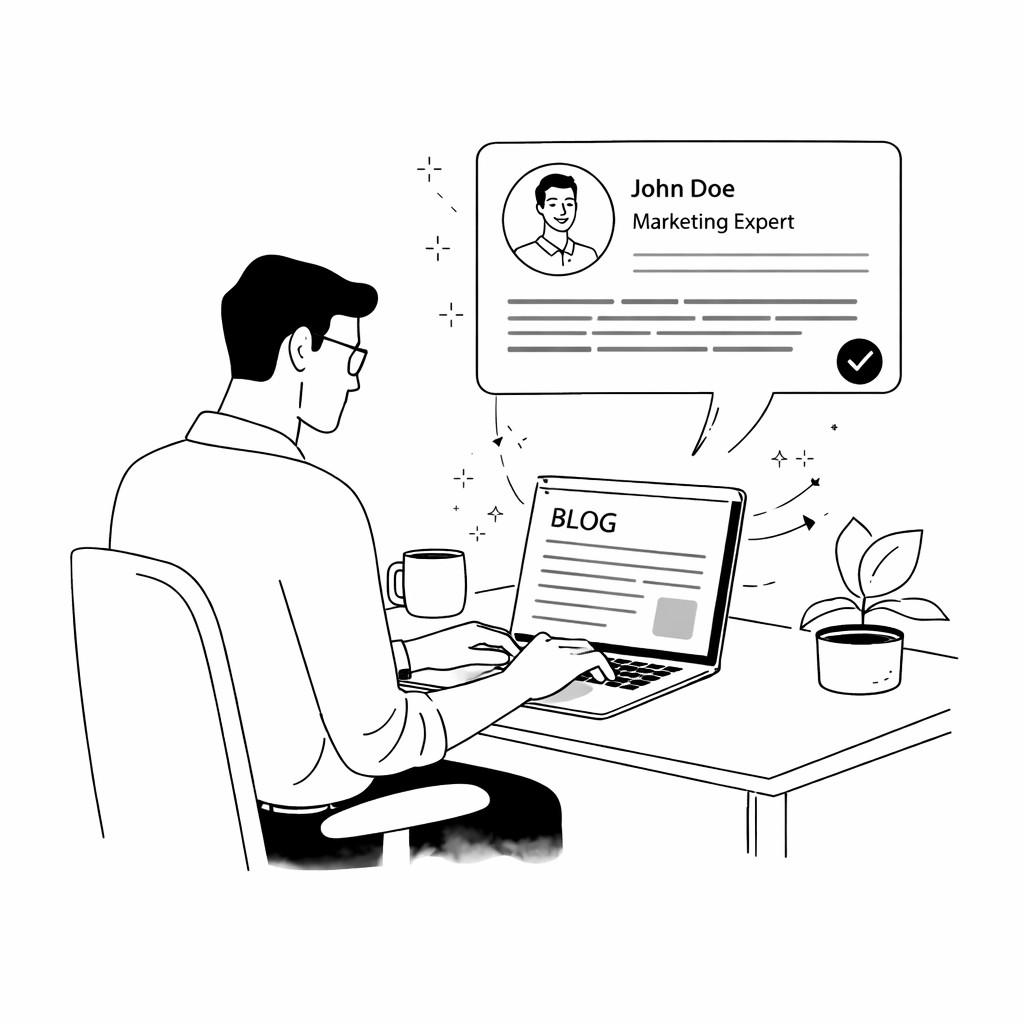
But a modern byline goes beyond just a name. A complete blog author bio typically includes:
- The author’s full name
- A brief description of their expertise
- A link to their author page or profile
- Sometimes a headshot photo
Think of it like a business card attached to your content. It tells readers (and search engines) exactly who created this piece and why they’re qualified to write it.
For years, many websites skipped bylines entirely. They published under generic names like “Admin” or just the company name. That worked fine when Google couldn’t evaluate author credibility. Those days are over.
Today, author attribution serves as a trust signal. It connects content to real humans with real expertise. And that connection directly affects how Google ranks your pages.
3. Why Google Cares About Who Writes Your Content
Google has a problem. Billions of web pages exist, and many of them contain garbage information. Some are outright dangerous—especially in health, finance, and legal topics.
So how does Google separate trustworthy content from the junk? One major way is by looking at who created it.
In 2018, Google released what’s now called the E-E-A-T guidelines. These guidelines help Google’s quality raters evaluate content based on Experience, Expertise, Authoritativeness, and Trustworthiness. Notice how three of those four factors directly relate to the person creating content.
When your article has no author byline, Google has nothing to evaluate. There’s no person to research. No credentials to verify. No track record to assess. Your content becomes anonymous—and anonymous content struggles to demonstrate expertise or build content authority.
Compare that to an article with a clear author attribution. Google can:
- Check if the author has written about this topic before
- Look for mentions of the author across the web
- Verify credentials through linked profiles
- Connect the author to a Knowledge Graph entity
This doesn’t mean Google manually reviews every author. Instead, Google’s algorithms have learned to recognize patterns that indicate expertise. Authors with consistent online presences, published work in their field, and mentions from authoritative sources get recognized as credible.
Your byline is the starting point for all of this. Without it, you’re essentially invisible to these trust-building systems.
4. The E-E-A-T Connection Most Websites Miss
E-E-A-T optimization isn’t just another SEO buzzword. It’s the framework Google uses to determine if your content deserves to rank. And author bylines sit at the center of it.
Let me break down how bylines connect to each E-E-A-T factor:
Experience — The first “E” was added recently and focuses on first-hand experience. When your author bio mentions that you’ve actually done the thing you’re writing about, it signals experience. “John Smith has built three successful SaaS companies” carries more weight than anonymous advice about startups.
Expertise — This covers knowledge and skill in a specific area. Your byline and author page showcase credentials, education, and professional background. Google can verify this expertise by finding consistent information across the web.
Authoritativeness — Authority comes from recognition by others in your field. When the same author name appears on guest posts, podcasts, interviews, and industry publications, Google sees authority building. Your byline connects all these mentions.
Trustworthiness — Trust is the sum of all other factors. Real names from real people with verifiable backgrounds create trust. Generic or hidden authorship destroys it.
Here’s what most websites miss: E-E-A-T isn’t just about having good content. It’s about proving that good content comes from qualified sources. Your brilliant 5,000-word guide means nothing if Google can’t verify who wrote it and why they’re qualified.
Many businesses spend thousands on content creation but skip the five-minute task of adding proper author attribution. They’re essentially building a house without a foundation.
The fix is straightforward. Every piece of content should clearly identify its author. That author should have a detailed bio page. And that bio should demonstrate relevant experience and expertise for your content topics.
5. How Author Bylines Directly Impact Your Rankings
5.1. Trust Signals That Crawlers Actually Detect
Google’s crawlers analyze more than just keywords on your page. They look for structural elements that indicate credibility. Author bylines with proper markup send clear trust signals.
When you add schema markup to your author information, you’re speaking Google’s language. You’re saying, “This content was created by this specific person, and here’s how to verify them.”
Crawlers detect:
- Author name in the page markup
- Links between the author name and their dedicated page
- Connections to social profiles and external publications
- Consistent author information across your site
These technical signals complement your on-page content. They provide the verification layer that separates professional publications from random web pages.
5.2. Knowledge Panel Triggers and Entity Recognition
Here’s where things get interesting. Google maintains something called the Knowledge Graph—a massive database of real-world entities and their relationships. People, places, companies, and concepts all exist in this graph.
When an author builds enough online presence, they can become a recognized entity. This triggers knowledge panels and establishes what SEO professionals call “topical authority.”
Your byline is the thread that connects everything. The same author name appearing on your site, LinkedIn, industry publications, and podcasts creates a pattern. Google recognizes this pattern and starts associating that author with specific topics.
Once Google sees your author as an entity, content from that author gets a credibility boost. It’s like having a verified badge for your expertise.
5.3. The Click-Through Rate Boost Nobody Talks About
Rankings matter, but clicks matter more. And author bylines directly impact whether people choose your result over competitors.
Search results increasingly show author information. Rich snippets can display the author’s name, photo, and credentials right in the search results. This visibility builds instant trust.
Think about your own behavior. When searching for business advice, would you rather click on anonymous content or an article clearly written by someone with relevant experience? Most people choose the credible-looking option.
Higher click-through rates signal relevance to Google. When more people click your result, Google interprets that as quality. This creates a positive feedback loop: better author visibility leads to more clicks, which leads to better rankings.
6. Signs Your Missing Bylines Are Hurting You
How do you know if absent author attribution is damaging your rankings? Look for these warning signs:
Your content ranks but doesn’t convert. Visitors land on your page but quickly leave. They don’t trust the information because they don’t know who wrote it.
Competitors with similar content outrank you. Check their pages. Do they have author bylines while yours don’t? That could explain the gap.
Your site struggles with “Your Money or Your Life” topics. Google holds health, finance, and legal content to higher standards. Without clear authors, this content rarely ranks well.
You’ve never appeared in Google News or Discover. These features favor content from identifiable authors with established credibility.
Your content gets zero backlinks or citations. Other websites hesitate to link to anonymous content. Proper author attribution makes your content more linkable.
Traffic dropped after a Google core update. Many updates have specifically targeted author credibility. Sites without proper attribution often see declines.
If any of these sound familiar, missing bylines might be your problem. The good news? This is one of the easiest SEO issues to fix.
7. How to Add Author Bylines the Right Way
7.1. Creating a Compelling Author Bio
Your blog author bio needs to accomplish several things quickly. It should identify who you are, establish why you’re qualified, and feel human rather than robotic.
Start with your name and primary role. Add one sentence about your relevant experience. Include a personal touch—something that makes you memorable.
Good example: “Marcus Chen is a former venture partner who’s helped scale 12 startups past $10M ARR. When he’s not analyzing pitch decks, you’ll find him attempting (and failing) to make the perfect sourdough.”
Bad example: “Marcus Chen is a business expert who writes about startups.”
See the difference? The first bio demonstrates specific experience and adds personality. The second says nothing meaningful.
Keep bios between 50-100 words. Include relevant credentials but skip the life story. Focus on what makes you qualified to write about your content topics.
7.2. Adding Schema Markup for Authors
Schema markup tells search engines exactly what your author information means. Without it, Google has to guess. With it, Google knows for certain.
Add Person schema to your author information. Include properties for name, job title, and same-as links to external profiles. Connect this schema to your Article schema using the author property.
Most major CMS platforms have plugins that handle this automatically. Yoast SEO, Rank Math, and similar tools can add author schema without coding knowledge.
7.3. Building Dedicated Author Pages
Every author on your site needs their own page. This page serves as the hub for that author’s credibility on your domain.
Include on author pages:
- Full name and professional photo
- Extended biography (200-400 words)
- Links to social profiles and external publications
- List of all articles by this author
- Contact information when appropriate
Link every byline to this author page. This internal linking structure helps Google understand the relationship between your content and its creator.
7.4. Linking to External Authority Profiles
Your author pages should connect to profiles elsewhere on the web. These external links verify that your author exists beyond your website.
Essential links include:
- LinkedIn profile
- Twitter/X account (if active in your industry)
- Other publications where the author has been featured
- Professional organization memberships
These links create the web of connections that Google uses to verify expertise. They transform your author from a name on a page to a verifiable entity.
8. Quick Wins vs. Long-Term Author Authority
Adding bylines delivers both immediate and long-term benefits. Understanding the timeline helps set realistic expectations.
Quick wins (weeks):
- Improved content indexing as Google better understands your pages
- Higher click-through rates from search results showing author information
- Better user engagement metrics as visitors trust attributed content
Medium-term gains (months):
- Ranking improvements as trust signals accumulate
- More consistent rankings after algorithm updates
- Increased backlinks as other sites recognize your authors
Long-term authority (years):
- Author recognition in Knowledge Graph
- Knowledge panels for established authors
- Topical authority that benefits all content from that author
The quick wins justify immediate action. But the real value comes from consistently building author authority over time.
Don’t expect overnight miracles. Author byline SEO is a compounding investment. Each piece of attributed content adds to the author’s credibility. Each external mention reinforces their expertise. Over time, this compounds into significant competitive advantage.
Start with the basics—add names and bios to all content. Then systematically build out author pages, schema markup, and external presence. Play the long game.
9. Common Byline Mistakes That Backfire
9.1. Generic “Admin” or Company-Only Attribution
Nothing screams “low-quality content” like an “Admin” byline. It suggests nobody wants to take responsibility for what’s written.
Company-only attribution has similar problems. “By Acme Corp” tells Google nothing about the actual expertise behind the content. Companies don’t have experience—people do.
Even if you’re a solo founder, create a personal author profile. Your name carries more weight than your company name for E-E-A-T purposes.
9.2. Missing or Broken Author Links
A byline without a link is only half useful. Readers and search engines need to verify author information. If clicking the author name leads nowhere—or worse, to a 404 error—you lose credibility.
Audit your existing content regularly. Check that all author links work and lead to complete author pages. Broken links actively harm your author authority signals.
9.3. Inconsistent Author Names Across the Web
Google builds author profiles by connecting mentions across the internet. Inconsistent names break these connections.
If you’re “John Smith” on your website, “J. Smith” on LinkedIn, and “Johnny Smith” on Medium, Google struggles to connect these identities. Pick one professional name and use it everywhere.
This applies to variations within your own site too. Every article should use the exact same author name format. Consistency is key to building recognizable author entities.
10. Real Ranking Improvements After Adding Bylines
Case studies consistently show positive results from proper author attribution implementation.
One tech blog added detailed author bios and schema markup to 200 existing articles. Within 60 days, organic traffic increased 34%. Their health-related content—previously struggling—finally reached the first page for competitive keywords.
A finance website transformed their anonymous “Staff Writer” content into properly attributed articles from credentialed financial planners. Rankings for YMYL keywords improved by an average of 12 positions over three months.
A SaaS company started building personal brands for their founding team members. Content authored by the CEO consistently outperformed identical content posted under the company name.
These improvements don’t happen by accident. Author bylines provide the credibility signals Google needs to trust your content. When your competitors have them and you don’t, you’re fighting with one hand tied behind your back.
11. Tools to Manage Author Bylines at Scale
Managing author information across hundreds of articles requires the right tools.
CMS plugins handle the basics. Yoast SEO, Rank Math, and All in One SEO all support author schema markup. They automatically add structured data when you configure author profiles.
Schema generators help create custom markup. Schema.pro and similar tools let you build detailed Person schema beyond what standard plugins offer.
Site audit tools find byline problems. Screaming Frog and Sitebulb can crawl your site and identify pages with missing author information, broken author links, or schema errors.
Author profile management becomes important with multiple writers. Consider tools like Byline or custom WordPress configurations to maintain consistent author information across contributors.
The investment in proper tooling pays off quickly. Manual author management doesn’t scale. Automated systems ensure every piece of content meets your author attribution standards.
12. Conclusion
Author bylines represent one of SEO’s most overlooked opportunities. While competitors chase complex link-building schemes, you can gain ground with a simple fix: put real names on real content.
The benefits compound over time. Each properly attributed article builds your authors’ credibility. Each external mention reinforces their expertise. Eventually, your authors become recognized entities that boost everything they write.
Start today. Add bylines to your most important content first. Build out comprehensive author pages. Implement proper schema markup. Then systematically expand to cover your entire site.
This isn’t complicated. It’s not expensive. It just requires attention to something most websites ignore. That’s exactly what makes it such a powerful opportunity.
Your content deserves credit. Give it a name—and watch your rankings respond.