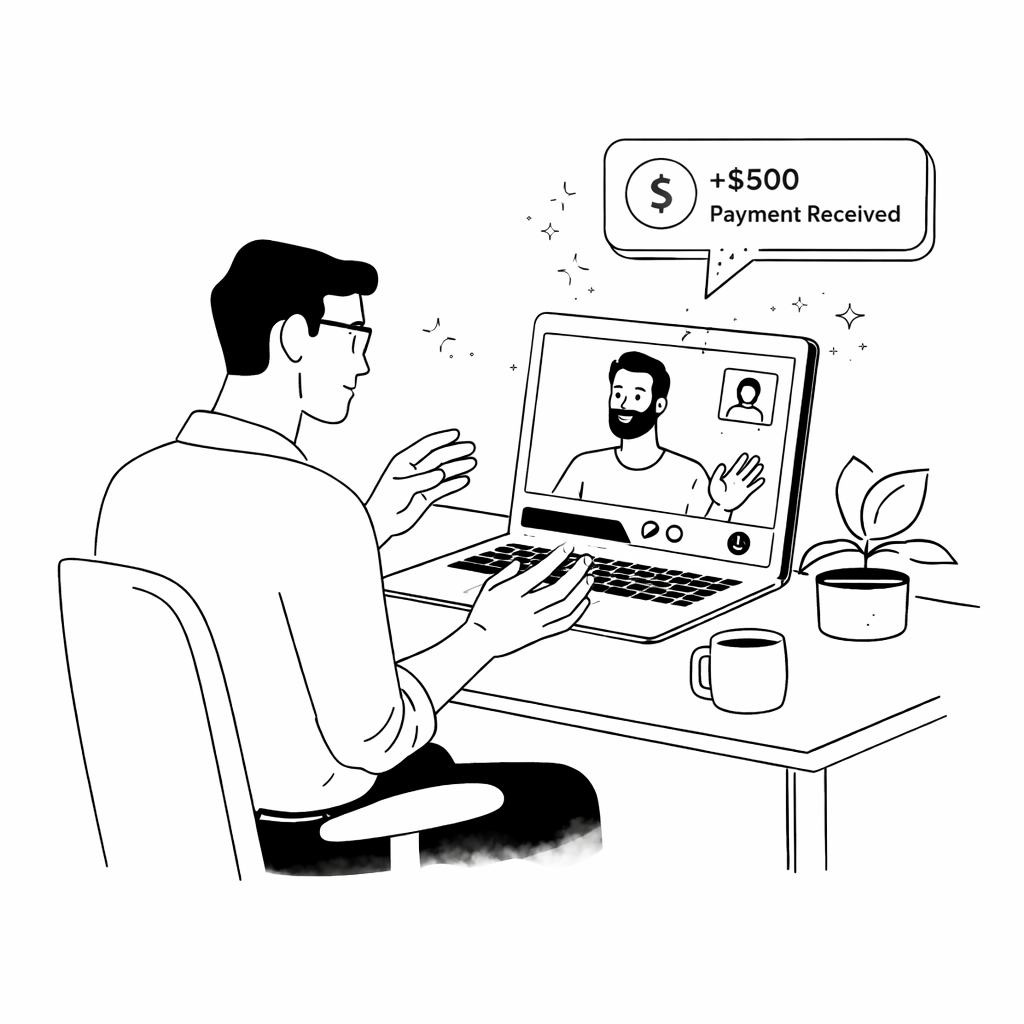

Want to get first SaaS customers before you even write a line of code? Here’s a truth that might sting: building your product first is the riskiest move you can make. After watching dozens of indie hackers fail, the pattern is always the same. They build in silence, launch to crickets, and wonder what went wrong.
This article isn’t about validation theater or collecting meaningless email signups. It’s about learning how to get customers before building a product. It’s about de-risking your next six months so you don’t waste time building something nobody wants to pay for.
What “Customers Before Product” Actually Means in 2025
Let’s get one thing straight. Likes, upvotes, and “this sounds cool” comments don’t count as validation. Email signups? Better, but still not enough. The only metric that truly matters is someone giving you money or a written commitment to pay.
Think of pre-product validation as a spectrum. At the weakest end, you have social media engagement. Moving up, you get email signups, then waitlists with intent questions, then paid deposits, and finally full payment for future delivery. The further up this ladder you climb before writing code, the safer your bet becomes.
I don’t count anyone as a customer until they’ve entered payment details. Everything else is just expensive market research. And here’s why 2025 makes this approach more powerful than ever: AI tools mean you can deliver value manually faster than you ever could before. You don’t need a finished product to start solving problems.
Why 10 Paying Customers Beats 1,000 Waitlist Signups
Something magical happens when someone pays you money. They transform from a passive observer into an invested co-creator. Paying customers will tell you exactly what to build and what to skip. They have skin in the game, which means their feedback is worth ten times more than polite suggestions from free users.
Waitlists have become vanity metrics in 2025. People sign up for everything these days, which means conversion rates have plummeted. A waitlist of 1,000 might convert to just five actual customers. But ten people who’ve already paid? They become your first testimonials, your first case studies, and your best referral sources. They’ll stick with you through the rough early days because they’re invested in your success.
The Myths Holding Founders Back from Pre-Selling
“People Won’t Pay for Something That Doesn’t Exist”
Really? Tell that to Kickstarter, which has processed billions in pre-orders. Or to every consultant who works on retainer. When someone says they won’t pay for something that doesn’t exist, the real objection is usually unclear value, not a missing product.
“I Need to Prove I Can Build It First”
Your ability to build is the least risky part of this equation. If you’re a technical founder, you already know you can ship code. Market demand is the unknown variable. Most technical founders over-index on execution risk and completely under-index on market risk. That’s backwards.
“Pre-Selling Only Works for Influencers”
Micro-communities have replaced mass audiences. Fifty highly-targeted people in a Slack group will convert better than 10,000 random Twitter followers. You don’t need influence. You need access to people with the problem you’re solving.
“AI Makes Building So Fast, I Might as Well Just Build”
This is the biggest trap of 2025. Yes, AI makes building faster. But it also makes competition faster. Speed to market doesn’t equal speed to product-market fit. You can ship a product in a weekend, but if nobody wants it, you’ve still wasted time. Pre-selling validates the SaaS idea before the competition even matters.
Finding Problems Worth Pre-Selling
Not every problem is worth solving. You want problems that are urgent and expensive, either in time or money. This is the “hair on fire” test. Ask potential customers what they tried before and what they’re currently paying. If they’ve spent money on inferior solutions, you’ve found gold.
Think of it as a pyramid. At the base, people complain about a problem. That’s a low signal. In the middle, people have tried other solutions. That’s a medium signal. At the top, people are currently paying for an inferior solution. That’s where you want to be for SaaS idea validation.
Your own frustrations can be a starting point, but verify that others share the same itch at the same intensity. I’ve built three products solving my own problems. Two failed because I was the only person with that specific problem at that intensity.
Here’s a goldmine for 2025: mine AI tool limitations. What are people doing manually that AI can’t quite handle end-to-end? AI can write content, but it can’t handle the full publish-distribute-optimize workflow. These gaps are where the best SaaS opportunities live right now.
The Pre-Sell Playbook Without Writing Code
Sell Transformation, Not Features
Frame your offer as a before-and-after story. “Go from drowning in spreadsheets to having automated reports in your inbox every Monday.” Use customer language, not founder language. Steal exact phrases from Reddit and Twitter complaints. When people see their own words reflected back, they feel understood.
The Minimum Viable Sales Page
You don’t need a fancy website. A Notion page, Carrd site, or Framer single-page can work perfectly. Your page needs four elements: the problem, the promise, proof (even if borrowed from similar solutions), the price, and a call to action. My best-converting pre-sell page was a Notion doc with four paragraphs. Fancy design is a procrastination trap.
Payment Without a Product
Stripe payment links require zero code. Gumroad and Lemon Squeezy make pre-orders simple. Some founders even use PayPal friends and family payments. The friction of payment is the validation, not the platform. If someone is willing to go through the hassle of paying you, they really want what you’re offering.
The Concierge First Model
This is your secret weapon for a SaaS pre-launch strategy. Sell the outcome, deliver it manually, then automate later. This isn’t a workaround. It’s a competitive advantage. You learn exactly what to build by doing the work yourself first. Sell “AI-written blog posts,” then manually use ChatGPT plus your editing skills, and build automation after you have ten customers who’ve shown you what matters.
Where Your First 10 Customers Are Hiding
Forget mass platforms. Your first customers are in micro-communities: Slack groups, Discord servers, and private Circles. These communities have higher trust and lower noise than Twitter or LinkedIn. Search for your niche plus “Slack invite” or “Discord community” to find them.
Build in public, but do it strategically. Don’t just share progress. Share the problem you’re solving. Engage with others’ build-in-public threads with genuine comments, not pitches. This is how you get first SaaS customers without feeling salesy.
Reddit and Indie Hackers work if you earn trust first. Reddit drove my first fifty users, but only because I spent two weeks genuinely helping people before ever mentioning my product. Follow the 10:1 rule: ten valuable contributions for every soft mention of what you’re building.
For B2B, LinkedIn DMs are underrated. Decision makers actually respond if your message is relevant. Try the research interview angle: “I’m building X and would love fifteen minutes to understand your workflow.” These interviews convert to customers at surprisingly high rates.
The Pre-Sell Pitch That Actually Works
Lead with specificity. “I noticed you mentioned struggling with invoice tracking in the freelancer subreddit” beats “Hey, I’m building a tool for freelancers.” Generic outreach gets generic responses, which is silence.
Use a three-sentence framework. First sentence: state the problem using their own words. Second sentence: describe your solution focused on outcomes, not features. Third sentence: make a specific, low-friction ask.
The worst question you can ask is “What do you think?” Opinions are polite. Commitments reveal truth. Instead ask, “Would you pay $49 for this if I built it?” That question separates the curious from the serious. And try the anti-pitch approach: “I’m not sure if this is right for you, but…” Reducing pressure often increases conversion when you’re trying to pre sell a SaaS product.
Pre-Sell Mistakes That Kill Momentum
Scope creep starts before code. Be ruthless about v1 limitations. Every promise you make is a future support ticket. Don’t overpromise features you can’t deliver just to close a sale.
“This is awesome!” doesn’t equal “Here’s my credit card.” Track commitments, not compliments. Enthusiasm feels good but means nothing without payment attached.
Don’t ignore “no” responses. A clear “no” with a reason is more valuable than ten “maybes.” Objections reveal what to fix or who to target differently. Each rejection teaches you something.
But also watch out for over-validating. At some point, you have to build. Don’t use “validation” as an excuse to avoid shipping. My personal rule: ten paying customers or thirty days of active selling, whichever comes first. Then I build or move on.
How Pre-Sell Customers Shape Your MVP
Your pre-sell customers define your feature priorities. What they’re paying for becomes your v1 scope. Nothing else matters until you’ve delivered on those promises. These customers become your beta testers, but with patience and context that random beta users never have.
These customers often know your competitors better than you do. Tap that knowledge. Ask them what’s missing from other solutions. The feedback loop is powerful because they’re invested in seeing you succeed. My best product decisions came from asking early customers one question: “What would make you recommend this to a colleague?”
The Real Risk Is Building First
Pre-selling isn’t the scary option. Building in silence is scary. The worst outcome of pre-selling is learning that nobody wants what you planned to build, and you learn that before wasting months of your life. The best outcome is having paying customers waiting eagerly for your MVP.
The best founders I know sell before they build. The struggling ones build before they sell. If you want to get first SaaS customers and validate your idea with real money, start having conversations today. Create that simple sales page. Ask for the payment. The code can wait.